WHAT IS SYNCHRONIZATION AND WHY WOULD YOU NEED IT?
What is synchronization? The concept is in the name: motion control devices being actuated in a ‘synchronized’ manner, and running at the exact same speed. The linear motion of multiple actuators are matched with each other to achieve complete synchronization. On the surface, synchronization can seem like an easy task. However, it can be entirely the opposite. Synchronization isn’t just achieved by wiring multiple actuators to the same switch, as many might presume – in an ideal world or a very simple setting, this might work. However, usually, it will result in multiple linear actuators moving at different speeds.
Even if two linear actuators of the same make and model are connected to the same power supply, a significant speed difference can occur if both are subjected to unequal loads, have experienced different wear and tear patterns, or are at different operating temperatures even, to mention a few problems. To achieve synchronized linear actuator movement, some form of motion control is a must. For an open-loop control system, the most popular synchronization option is a speed controller. A more sophisticated form of synchronized motion control is with a closed-loop system, which utilizes feedback from actuators to ascertain the individual needs of each device, making real-time adjustments. This form of synchronization is remarkably accurate, with no chance of error. There are multiple applications where linear actuator synchronization is a core requirement.
lineaaritoimilaiteratkaisut
Tarjoamme laajan valikoiman edistyneitä ohjaimia ja erityyppisiä toimilaitteita monilla räätälöintivaihtoehdoilla, mikä varmistaa, että laajasta valikoimastamme löytyy jotakin lähes jokaiseen sovellukseen. Anna meidän auttaa sinua löytämään ihanteellinen ratkaisu projektisi synkronointiin!
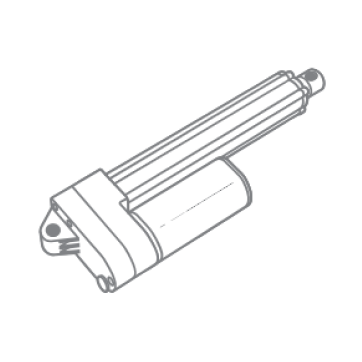
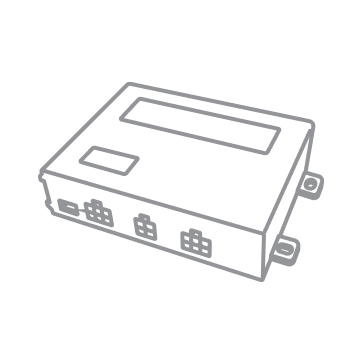
Modulaariset nostopilariratkaisut
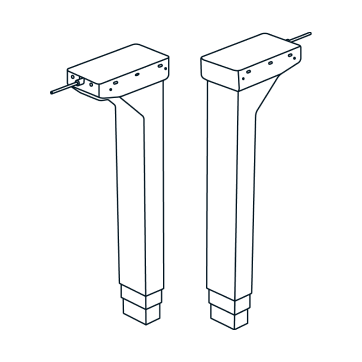
Sähkökäyttöiset nostopilarit tarjoavat korkean suorituskyvyn, luotettavuuden ja turvallisuusominaisuudet, jotka voivat hyödyttää monenlaisia sovelluksia lähes kaikilla toimialoilla. Lisäämällä räätälöintivaihtoehtoja, modulaaristen nostopilareiden julkaisumme useampine kokoonpanoineen edistää suurempaa valikoimaa, joka vastaa paremmin tarpeitasi!
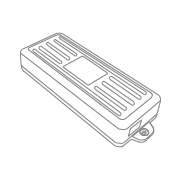
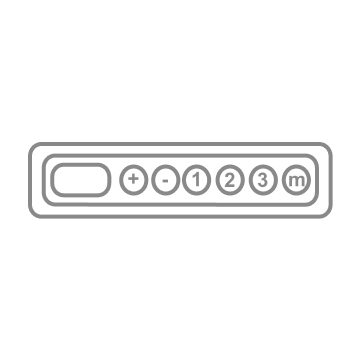
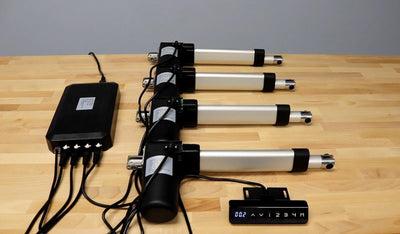
Avoimen silmukan synkronoinnin tapauksessa, kuten useiden toimilaitteiden ohjaamisessa PA-28-ohjausyksiköllä tai omalla ohjelmoidut mikrokontrollerit, sinun on varmistettava, että nopeussäätimet pystyvät käsittelemään järjestelmää. Niissä on oltava riittävästi nastoja käyttämiesi toimilaitteiden lukumäärää varten, ja koodin on oltava moitteeton. Kun suljetun silmukan palautteen avulla järjestelmissä tärkein huomioon otettava tekijä on synkronoituihin toimilaitteisiin integroidun takaisinkytkentäanturin tyyppi. Tässä suhteessa Hall-ilmiöön perustuva takaisinkytkentä ja potentiometrin takaisinkytkentä ovat listan kärjessä.
In Hall effect linear actuators, like the ones shown on this page, the feedback encoder records the number of revolutions the actuator’s driving motor is going through while moving. From this information, it is very easy for the controller to calculate the exact position, and hence the speed, of the actuator’s rod. The encoders of all the linear actuators are constantly sending feedback to the controller, which determines which actuator(s) is lagging or speeding up, and then adjust their respective speeds accordingly to ensure smooth, synchronized movement. When using Hall Effect actuators, it is necessary to use a compatible controller as well. You cannot use them with any ordinary controller, instead, one that is designed for this specific purpose is required. The control box must also have the desired number of channels in accordance with the number of actuators being used. Potentiometer feedback works in a similar way. As the actuator’s rod moves in and out, the potentiometer’s electrical resistance changes with it proportionately. This information is transmitted to the controller, which then performs the exact same function as explained above to synchronize actuators.
While many of our actuators can be customized to include feedback options (just check their data sheet), we also have stocked options!
Starting with our linear actuator range, we have high-performing Hall effect actuators with 12 VDC and 24 VDC variants. For example, our PA-04-HS linear actuator comes installed with a built-in Hall effect sensor that enables synchronization. Customers can also choose between 12 VDC and 24 VDC power supply options. The 12 VDC power supply linear actuators are much more common as most power supplies are of this specification. They are easier to integrate into actuation systems and pack decent performance specifications. The 24 VDC actuators need a specialized power supply, which often requires additional investment and equipment.
Nämä versiot pystyvät kuitenkin tuottamaan enemmän tehoa ja vääntömomenttia, kuluttavat vähemmän virtaa ja vaativat ohuempia johdotuksia, mikä kompensoi erinomaisesti edellä mainittuja haittoja. Valintasi olipa mikä tahansa, Progressive Automations varmistaa, että useiden toimilaitteiden ohjaaminen on investointisi arvoinen. Synkronointitarkoituksiin tarjoamme monikanavaisia ohjausyksiköitä, jotka on suunniteltu käsittelemään takaisinkytkentäpohjaisia toimilaitteita, mukaan lukien PA-40- ja FLTCON-ohjausyksikkösarjamme. Hall-ilmiöön perustuville toimilaitteille suunnitellut ohjaimet voivat toimia sekä 12 että 24 VDC:n toimilaitteiden kanssa. PA-40on itse asiassa erikoistunut synkronointiratkaisu kaksois-Hall-ilmiötä käyttäville sovelluksille.