
- Grundlagen
- Wichtige Komponenten und Typen
- Vorteile
- Anwendungen
- Wie man auswählt
- Häufig gestellte Fragen
- Rezensionen
- Abschluss
Elektrische Höhe verstellbare Tischlifte Elektrische Tischlifte haben die Art und Weise, wie wir Stehtische, Produktionslinien, Lagerflächen und viele andere höhenverstellbare Plattformsysteme nutzen, revolutioniert. Dank ihrer benutzerfreundlichen Bedienung sind diese intelligenten Hebelösungen weltweit in Haushalten, Büros und der Industrie unverzichtbar geworden. Auf dieser Seite erfahren Sie, was elektrische Tischlifte sind, welche Einsatzmöglichkeiten und Vorteile sie bieten und wie Sie die optimale Lösung für Ihre Bedürfnisse auswählen.
Was ist ein Tischlift und wie funktioniert er?
Ein Tischlift ist ein Standardtisch, der mit einem Aktuator-betriebener Hebemechanismus. Verwendung elektrische LinearantriebeIhr Zweck ist die Höhenverstellung des Tisches, entweder manuell oder per Fernbedienung. Tischlifte sind in verschiedenen Größen und Formen erhältlich, um den unterschiedlichen Bedürfnissen der Nutzer gerecht zu werden. So lässt sich der Tisch flexibel an Arbeits- oder Freizeitbedürfnisse sowie an die Körpergröße jedes einzelnen Nutzers anpassen. Neben der Steigerung der Arbeitseffizienz bieten elektrisch höhenverstellbare Tischlifte oft intelligente, programmierbare Funktionen. Diese intelligenten Hebelösungen minimieren das Verletzungsrisiko und Produktschäden am Arbeitsplatz.

Wie funktioniert ein Tischlift?
Elektrisch höhenverstellbare Tischlifte verwenden typischerweise Motoren. Hebesäulen oder Stehpulte die über aktuatorbetriebene Hubmechanismen verfügen, welche die gesamte mechanische Arbeit übernehmen. Ein oder mehrere Aktuatoren können an der Hubtischbasis befestigt werden, um den gesamten Hubvorgang in Gang zu setzen. Elektromotor ist direkt mit einem Zahnradsatz verbunden und dreht eine Gewindespindel, um die Teleskopbeine aus- und einzufahren. Durch unser Steuerkästen und kompatibel FernbedienungenDie Höhe des Rahmens lässt sich an die Bedürfnisse des Benutzers anpassen. Der Bediener wählt einfach die gewünschte Höhe mit der mitgelieferten Fernbedienung aus, und der Rahmen fährt entsprechend aus.
Hauptkomponenten eines Hubtisches und Hubsäulen
Nachfolgend haben wir den grundlegenden Aufbau eines elektrisch höhenverstellbaren Tischlifts und die Komponenten, aus denen der Tischrahmenmechanismus besteht, aufgelistet.

Die Plattform:
Die Plattform bezeichnet die erhöhte Tischplatte des Tischlifts. Dieser Teil des Rahmens ist so konstruiert, dass er verschiedenen Umgebungsbedingungen standhält und daher extrem langlebig ist.
Die Beine:
Linearantriebe werden in den Beinen unserer motorisierten Hubsäulen und Stehtische eingesetzt. Diese elektrischen Linearantriebe wandeln elektrische Energie in lineare Bewegung um, um Druck- und Zugkräfte zu erzeugen. Unsere Steuereinheit ermittelt die Positionen der Linearantriebe mithilfe von Positionsrückmeldungen der internen Hall-Effekt-Sensoren. Während sich der Motor in den Antrieben dreht, werden Rechteckimpulse von 5 V erzeugt. Hall-Effekt-Sensoren als lesbare Signale, die von der Steuereinheit gezählt werden, um die Bewegung und die Positionen jedes Beins zu bestimmen.
Die Steuereinheit:
Die Steuereinheiten sind das Herzstück unserer elektrisch höhenverstellbaren Tische und ermöglichen programmierbare, intelligente Hebelösungen. Sie erfassen die Positionen der einzelnen Tischbeine und geben die benötigte Leistung aus, um die Beine synchron in die gewünschte Position zu bewegen. Durch die Anpassung der Ausgangsleistung erkennt und korrigiert die Steuereinheit die meisten Störungen, wie z. B. ungleichmäßige Gewichtsverteilung, alternde Motoren und Hindernisse.
Intelligente Steuerungsoptionen:
Tischlift Fernbedienungen Die Fernbedienung ermöglicht es dem Benutzer, Eingaben an die Steuereinheit seines Schreibtisches zu machen und diesen so in der Höhe zu bewegen. Durch Aktivierung der Fernbedienung werden Signale an die Eingangsanschlüsse der Steuereinheit gesendet. Die Steuereinheit berechnet die benötigte Leistung für die motorisierten Beine, um die vom Benutzer per Fernbedienung eingestellte(n) Position(en) zu erreichen. Einige Fernbedienungen verfügen über Tasten zum Abrufen voreingestellter Speichereinstellungen, sodass Benutzer gewünschte Höhen speichern können. Bluetooth-Dongle RT-BT1 Verbindet kompatible FLTCON-Steuerboxen über die Progressive Motion App mit Ihrem Smartphone. Die App ist für Android- und iOS-Plattformen verfügbar.
Die Rahmung:
Alle unsere elektrischen Stehschreibtische werden mit pulverbeschichteten Stahlrahmen geliefert. Dies garantiert hohe Stabilität und Langlebigkeit im Stand. Stahl ist zudem äußerst robust und verbiegt sich auch bei Belastung innerhalb der zulässigen Tragfähigkeit nicht. Motorisierte Hubsäulen werden zwar nicht mit Rahmen im Lieferumfang enthalten, ihre Befestigungspunkte mit vorgebohrten Löchern ermöglichen jedoch die Integration individueller Rahmen.
Hebesäulen:
Unsere motorisierten Hubsäulen zeichnen sich im Allgemeinen durch eine robustere Konstruktion, dickere Wände und Getriebeübersetzungen für ein höheres Drehmoment als die meisten herkömmlichen Stehpulte aus. Mehrere Säulen können an dieselbe Steuerung angeschlossen werden, um gemeinsam mit der gleichen Geschwindigkeit zu fahren. synchronIhre schlichte und wartungsarme, robuste Konstruktion eignet sich ideal für individuelle Schranklösungen, Hausautomation oder die Höhenverstellung von industriellen Arbeitsplätzen und Tischen. Aufgrund ihrer hohen Belastbarkeit – bis zu 590 kg pro Bein – finden sie sich meist in industriellen, höhenverstellbaren Plattformsystemen wieder. LG-12 Motorisierte Hubsäule.
Motorisierte Hubsäulen ansehen
Erläuterung der verschiedenen Arten von Hebemechanismen
Tischlifte werden üblicherweise nach der Art des Hubmechanismus klassifiziert. Nachfolgend finden Sie eine Liste der verschiedenen Arten von Tischliftmechanismen.
Scherenhebebühnenbasis:
Die Energiequelle senkt den Fuß des Stromabnehmers ab, woraufhin die Tischstützen ausgefahren werden.
Schraubenaufzug:
Durch die Drehung der Schraube bewegt sich der Tisch entlang seiner Länge, wodurch ein einfacher Mechanismus entsteht.
Zahnstangen-Tischlift:
Durch die Drehung des Ritzels bewegt sich die damit verbundene Zahnstange linear und hebt so den Tisch an.
Kette und Ritzel:
Ein vertikal ausgerichteter Kettenantrieb dient dazu, ein Kettenrad zu drehen und so den Tisch nach oben zu bewegen.
Artikuliert:
Neben der erwarteten vertikalen Bewegung ermöglicht dieser Typ auch eine horizontale Verschiebung. Dies wird durch den Einsatz von Linearantrieben erreicht, die Gelenkarme ausfahren.
Teleskopierbar:
Bei dieser Methode werden Linearantriebe im Hohlraum eines größeren Zylinders eingesetzt.
Manuell oder elektrisch: Was ist das Richtige für Sie?
Beim Betrieb eines Hubtisches wird die meiste Energie zum Anheben benötigt. Das Absenken erfordert deutlich weniger Energie und kann mitunter durch einen Sanftanlaufmechanismus erfolgen. Alle Hubtische lassen sich grundsätzlich in manuelle und automatische unterteilen, je nach Art der verwendeten Antriebsquelle.
Manuelle Tischlifte
Bei einem handbetriebenen Hubtisch nutzt der Bediener mechanische Vorrichtungen und Werkzeuge wie Kurbel, Ratsche, Schraube oder Pumpe, um den Hubmechanismus zu aktivieren. Dies kann entweder per Hand oder mit dem Fußpedal erfolgen. Diese beiden Antriebsmethoden eignen sich gut für vergleichsweise kleine Tische, die keine schweren Lasten tragen müssen. Da manuelle Hubtische keinen Strom benötigen, sind sie mobil und können beliebig lange eingesetzt werden, ohne dass Akkus aufgeladen werden müssen. Pneumatisch unterstützte manuelle Alternativen sind ebenfalls geeignet für Anwender, die bereit sind, etwas Kraftaufwand für die Höhenverstellung zu betreiben, kleinere Arbeitsplätze bevorzugen und mit einer geringeren Tragfähigkeit arbeiten können.
Elektrische Tischlifte
Elektrisch höhenverstellbare Tischlifte sind in den meisten Haushalten und Büros bewährte Allrounder, die intelligente Hebelösungen und fortschrittliche Sicherheitsfunktionen bieten. Sie eignen sich ideal für Nutzer, die programmierbare Tischgestelle schätzen, eine moderate Tragfähigkeit benötigen und den Komfort von Elektromotoren bevorzugen, die die Höhenverstellung automatisch durchführen. Besonders ältere, verletzte oder körperlich eingeschränkte Nutzer profitieren von der automatischen Motorisierung. Einige Modelle bieten zudem die Möglichkeit, mit tragbaren Akkus zu arbeiten und so die Mobilität zu erhöhen und den Betrieb auch ohne Steckdose zu ermöglichen. Die fortschrittliche Technologie von elektrischen Stehtischen und motorisierten Hubsäulen ermöglicht außerdem Konfigurationen mit drei oder sogar vier Beinen, die sich synchron bewegen, falls eine höhere Tragfähigkeit, mehr Stabilität oder eine größere Arbeitsfläche benötigt wird.
Progressive Motion App: Drahtlose Smartphone-Steuerung für Tischlifte
Die wichtigsten Vorteile der Verwendung eines verstellbaren Tischlifts
Die Automatisierung von Anlagen bietet Vorteile für alle, insbesondere beim Heben und Positionieren schwerer Lasten und der Verbesserung von Arbeitsbedingungen. Dank technologischer Fortschritte hat sich der Einsatz von Hubtischen immer weiter verbreitet. Diese verstellbaren Plattformsysteme werden vorwiegend eingesetzt, um Unfälle zu minimieren, den Komfort zu erhöhen und die Produktivität zu steigern. Einige wichtige Vorteile sind nachfolgend aufgeführt.

Ergonomische Höhenverstellung
Ein verstellbarer Tischrahmen lässt sich auf nahezu jeder Oberfläche platzieren, wobei die üblichste Position für die Tischhebung direkt auf dem Boden ist. Dank der vielseitigen Teleskopbeine erreichen unsere Rahmen und motorisierten Hubsäulen beachtliche Hubhöhen und kompakte Einfahrhöhen, um den Bedürfnissen aller Anwender gerecht zu werden.
Gleichmäßige und zuverlässige Bewegung
Der Tisch lässt sich per Fernbedienung stufenlos in jede beliebige Höhe verstellen. Die Bewegung erfolgt nahtlos und geräuscharm. Zudem hält er die eingestellte Höhe auch bei Stromausfall.
Modulare Vielseitigkeit
Die Plattform kann mit einer Vielzahl zusätzlicher Vorrichtungen ausgestattet werden. Dies reicht von herkömmlichen Absperrungen und Toren bis hin zu unkonventionellen Kippplattformen, Drehtischen oder Förderbändern. Für hochspezialisierte Anwendungen können die Plattformen mit Arbeitsflächen ausgestattet werden, die über Klemmen oder andere spezielle Arbeitskomponenten verfügen.
Tragbarer Betrieb
Viele zweibeinige Stehpulte und motorisierte Hubsäulen können in Kombination mit tragbaren 24-V-Gleichstrombatterien betrieben werden. FLTCON-2-24VDC Steuerbox. Diese Konfigurationen, kombiniert mit passenden LenkrollenEs handelt sich im Wesentlichen um tragbare und halbtragbare Hebetische, mit denen Sie Ihren Tischlift und Ihre Ausrüstung problemlos transportieren können.
Programmierbare Funktionen
In Kombination mit modernen Fernbedienungen lassen sich die gewünschten Höhenpositionen des Tisches programmieren und in voreingestellten Speichereinstellungen speichern. Die Steuereinheiten verfügen zudem über Sicherheitsfunktionen wie Überhitzungsschutz, Schutz vor Dauerbetrieb, Kindersicherung, maximale und minimale Höhenbegrenzung, Sanftanlauf und -stopp sowie Kollisionserkennung.
Geringer Wartungsaufwand und lange Lebensdauer
Stehpulte und motorisierte Hubsäulen sind zuverlässig, langlebig und robust. Sie sind so konstruiert, dass sie auch unter hoher Belastung über viele Jahre hinweg zuverlässig funktionieren und nur minimalen Wartungsaufwand erfordern. Dies wird durch unsere 96-monatige (8-jährige) Garantie unterstrichen. Garantie für Stehtischgestelle und 84 Monate (7 Jahre) Garantie für motorisierte Hubsäulen.
Verbesserte Arbeitsbedingungen und Produktivität
Hubtische verbessern die Produktivität und Körperhaltung von Mitarbeitern, die körperlich aktiv arbeiten müssen, und reduzieren so Ermüdung und Verletzungsrisiko. Wiederholtes und kontinuierliches Heben erhöht das Verletzungsrisiko. Von Rückenschmerzen und Karpaltunnelsyndrom über eingeklemmte Finger bis hin zu Knochenbrüchen – ergonomische Hubtische beugen diesen Problemen und Risiken vor.
Anwendungen elektrischer Tischlifte im Alltag
Tischlifte können in Haushalten, Büros und an industriellen Arbeitsplätzen für unterschiedliche Zwecke eingesetzt werden. Werfen wir einen Blick auf die häufigsten Anwendungen.
Stehschreibtische
The most popular use of a table lift is as the foundation of a standing desk. The ability to adjust the height of a table is the key feature, allowing the user a selection of desired table heights. Due to the specific construction of the electric table lift mechanism, it is simple to organize computer wires and other peripherals through added cable management accessories that are easily integrated with the standing desk.
Die beliebteste Verwendung eines Tischlifts ist als Grundlage für einen Stehschreibtisch. Die verstellbare Höhe des Tisches ist das Hauptmerkmal, das dem Nutzer die Auswahl verschiedener Arbeitshöhen ermöglicht. Durch die spezielle Konstruktion des elektrischen Tischlift-Mechanismus lässt sich die Organisation von Computerkabeln und anderen Peripheriegeräten durch zusätzliches Kabelmanagement-Zubehör, das sich leicht in den Stehschreibtisch integrieren lässt, einfach realisieren.
Couchtische
Es mag so erscheinen, dass jede kompakte Oberfläche als Couchtisch dienen kann. Ein kleiner Tisch mit einer Hebefläche verleiht Ihrem Interieur jedoch definitiv eine leicht futuristische Note. Ein solcher aufgewerteter Couchtisch ist damit ein tolles Stück minimalistischen oder Hightech-Mobiliars.
Küchenstationen
Im Sinne häuslicher Bequemlichkeit können Tischlifte auch zur Aufwertung eines Küchentisches oder einer Arbeitsplatte eingesetzt werden. Kleine Küchen sind in vielen Wohnungen problematisch, und dank der in Breite und Höhe verstellbaren Rahmen ist dies eine effektive Lösung, um sich an räumliche Einschränkungen anzupassen.

Fertigungs- und Lagerbereiche
The technical specifications of models intended for such industrial purposes differ from models and specifications used for domestic purposes. It starts visually. Factories typically require larger, sturdier tables to cater to the significant weight requirements. On top of that, industrial table lifts should feature durable metallic tabletops as well as more complex lifting mechanisms. In such table lift models, security functions are more advanced than in other models. Specific applications in manufacturing and storage spaces include loading and unloading, conveyor belt systems, pallet handling, etc.
Machen Sie den Test: Finden Sie Ihren perfekten Schreibtisch
Die richtigen Hebesäulen für Ihr Projekt auswählen
Die Auswahl der richtigen motorisierten Hubsäulen ist einer der wichtigsten Schritte bei der Konstruktion eines funktionalen und zuverlässigen Hubtisches oder verstellbaren Plattformsystems. Wenn Sie verstehen, wie Sie Hubkraft und Hublänge optimal aufeinander abstimmen und gleichzeitig die Kompatibilität mit Ihrer Rahmengröße sicherstellen, können Sie die am besten geeigneten Säulen für Ihr Projekt auswählen.
1. Verständnis der Hebekapazität
Die Tragfähigkeit einer Säule bestimmt die maximale Last, die sie sicher und gleichmäßig heben kann. Jede Säule ist für dynamische (bewegliche) und statische (stationäre) Lasten ausgelegt. Es ist wichtig, nicht nur das Gewicht der Tischplatte oder der Konstruktion zu berechnen, sondern auch jegliche zusätzliche Ausrüstung wie Monitore, Werkzeuge oder Maschinen, die darauf stehen sollen.
Für die meisten Büro- oder Heimanwendungen sind Säulen mit einer Tragfähigkeit von mindestens 82 kg pro Bein in der Regel ausreichend. Für anspruchsvollere Anwendungen wie industrielle Arbeitsplätze oder Labortische sollten Sie Modelle mit einer Tragfähigkeit von mindestens 104 kg pro Bein und mehrere synchronisierte Säulen in Betracht ziehen. Eine Überschreitung der maximalen Tragfähigkeit einer Säule kann zu reduzierter Geschwindigkeit, ungleichmäßigem Heben oder langfristigem Motorverschleiß führen. Wählen Sie daher am besten ein System, das eine Sicherheitsreserve über Ihren erwarteten Gewichtsanforderungen bietet. 
2. Hublängen- und Höhenbereich
Die Hublänge bestimmt, wie weit die motorisierten Hubsäulen aus- und eingefahren werden können und beeinflusst somit direkt den gesamten Höhenbereich Ihres Systems. Beispielsweise ermöglicht eine Säule mit 63,5 cm Hub das Verstellen eines Schreibtisches von Sitz- auf Stehhöhe, während industrielle Hubtische unter Umständen längere Hübe benötigen, um spezielle Maschinen oder Montageanlagen aufnehmen zu können.
Bei der Wahl der Hublänge sollten Sie sowohl Ergonomie als auch den verfügbaren Platz berücksichtigen. Achten Sie bei einem Schreibtischlift für Selbstbauprojekte darauf, dass der Höhenverstellbereich Ihren Komfortansprüchen im Stehen und Sitzen entspricht. Bei mehrstufigen Teleskopbeinen ermöglichen kompakte Abmessungen im eingefahrenen Zustand eine geringere Stellfläche bei gleichzeitig großem Auszugsbereich – ideal für beengte Platzverhältnisse oder kompakte Bauweisen.
3. Kompatibilität der Rahmengröße
Die Kompatibilität der Rahmengröße bestimmt, wie gut sich die motorisierten Hubsäulen in die Basiskonstruktion integrieren lassen. Maßabweichungen können zu Instabilität, ungleichmäßigem Heben oder unnötiger Belastung des Systems führen. Wenn Sie eine Konstruktion von Grund auf neu aufbauen, definieren Sie zunächst die Maße Ihrer Tischplatte oder Lastfläche und wählen Sie dann Säulen, die ausreichend Abstand für Balance und Lastverteilung bieten. Unsere motorisierten Hubsäulen verfügen über Befestigungspunkte mit vorgebohrten Löchern für eine einfache Integration und sind für die Verwendung mit einer Vielzahl von individuellen Rahmen geeignet.
4. Steuerung und Anpassung
Neben den mechanischen Spezifikationen sollten Sie auch Ihr Steuerungssystem berücksichtigen – ob Sie eine einfache Auf-/Ab-Funktion, eine synchronisierte Mehrbeinbewegung oder Sicherheits- und programmierbare Funktionen wie voreingestellte Speicherplätze bevorzugen. Viele moderne Säulen verfügen über Hall-Effekt-Sensoren das ausgeben kann Positionsrückmeldung zur präzisen Synchronisierung und Positionierung.
Synchronisierte Systeme: Echte Synchronisation erreichen
Häufig gestellte Fragen
- Wir bieten eine breite Palette an Hubsäulen und Tischliften mit Tragfähigkeiten von 30 kg bis 590 kg pro Bein. Mit vier synchronisierten LG-12 Modul-Hubsäulen erreichen wir sogar bis zu 2360 kg. Kann ich das Tischliftsystem selbst montieren oder benötige ich einen Fachmann?
- Ja – unsere Liftsysteme sind für die einfache Selbstmontage konzipiert und werden mit Bedienungsanleitungen und Hinweisen zur Fehlerbehebung geliefert. Sind Ihre Tischlifte mit individuellen Tischplatten kompatibel?
- Ja, individuelle Tischplatten sind innerhalb des Verstellbereichs unserer Tischliftrahmen möglich. Die Maßzeichnungen finden Sie in unseren Benutzerhandbüchern. Wie steuere ich die Höhenverstellung eines Hubtisches?
- Unsere Hubtische und Hubsäulen werden als Set mit einer kabelgebundenen Fernbedienung mit Auf- und Ab-Tasten zur Höhenverstellung geliefert. Alternativ können Sie drahtlose Funkfernbedienungen oder Bluetooth-Dongles verwenden, um kompatible FLTCON-Steuergeräte über die Progressive Motion App mit Ihrem Smartphone zu verbinden. Die App ist für Android und iOS verfügbar. Können Ihre Hubtische Voreinstellungen für bevorzugte Höhen speichern?
- Ja, viele unserer kabelgebundenen Fernbedienungen, wie z. B. die RT-11, ermöglichen es unseren Hubtischen und motorisierten Hubsäulen, bis zu 4 programmierbare Tischhöhen zu speichern. Was ist der Unterschied zwischen einer Hubsäule und einem Hubtischgestell?
- Einzelne Hubsäulen bestehen aus einem teleskopierbaren Bein (oder einer modularen Säule), das aus- und eingefahren werden kann. Ein oder mehrere motorisierte Hubsäulen können zu einem Hebesystem kombiniert werden. Diese werden als Säulensets mit der benötigten Steuereinheit und Fernbedienung verkauft. Unser Tischgestell besteht aus einem kompletten Rahmen (oft mit 2 oder 3 Beinen), der zu einer Konstruktion zusammengebaut wird, auf der Sie Ihre Tischplatte montieren. Zum Lieferumfang gehören Querträger, Montagehalterungen, Kabelbäume, Fernbedienungen usw. Können Tischlifte im Freien oder in industriellen Umgebungen eingesetzt werden?
- Sie können in industriellen Tischliften oder in kontrollierten Innenräumen für Anwendungen eingesetzt werden, die innerhalb der zulässigen Tragfähigkeit liegen; Wir bieten jedoch keine Tischlifte für den Außenbereich an, die witterungsbeständig sind. Welche Stromversorgung wird für elektrische Tischlifte benötigt?
- Die meisten unserer Tischlifte und Hubsäulen werden mit 110 V Wechselstrom an einem FLTCON-kompatiblen Steuergerät betrieben, das als Stromversorgung für den elektrischen Tisch dient. Welche Sicherheitsmerkmale bieten Ihre Hubtische und Hubsäulen?
- Zu den Sicherheitsmerkmalen unserer Tischlifte gehören Überhitzungsschutz, Kindersicherung, maximale und minimale Höhenbegrenzung, Sanftanlauf und -stopp sowie Kollisionserkennung. Wie wähle ich das richtige Hubtischsystem für meine Anwendung aus?
- Achten Sie bei der Auswahl der Komponenten Ihres Tischliftsystems auf folgende Spezifikationen:
• Geschätzte Tragfähigkeit, die Sie benötigen.
• Anzahl der benötigten Beine.
• Benötigter Höhenbereich für Ihren Anwendungsfall. • Benutzerpräferenzen für voreingestellte Speichereinstellungen, drahtlose/kabelgebundene Steuerung und/oder App-Integration.
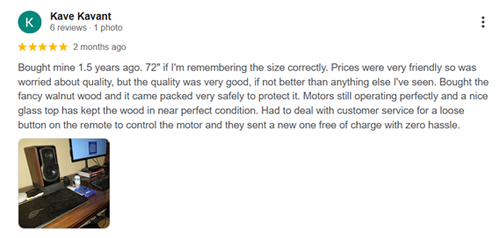
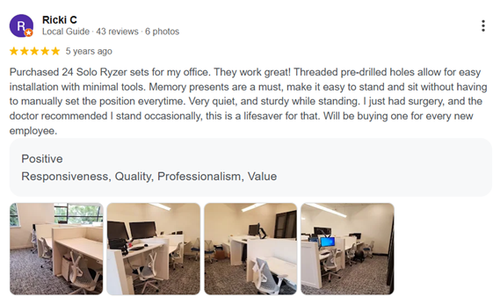
Rezensionen

Abschluss
Wir hoffen, Sie fanden diesen Artikel genauso informativ und interessant wie wir, insbesondere wenn Sie nach einer Anleitung zur Auswahl geeigneter Schreibtischgestelle und motorisierter Hubsäulen für Ihre Anwendung gesucht haben. Sollten Sie Fragen zu unseren Produkten haben oder Schwierigkeiten bei der Auswahl der passenden Modelle für Ihre Bedürfnisse haben, kontaktieren Sie uns gerne! Wir sind Experten auf unserem Gebiet und helfen Ihnen gerne bei allen Fragen weiter!sales@progressiveautomations.com | 1-800-676-6123