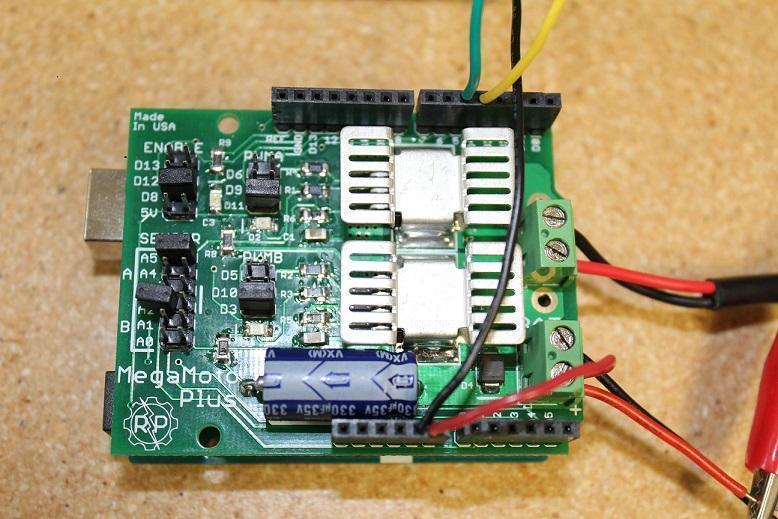
V dnešnom návode si ukážeme, ako zistiť, akú silu lineárny aktuátor vyvíja, monitorovaním množstva prúdu, ktorý spotrebúva. Pôjde o jeden z našich pokročilejších návodov a bude vyžadovať zložitejšie kódovanie, kalibráciu a programovanie. Budeme sa venovať monitorovaniu analógového vstupu a tomu, ako využíva svoje funkcie. Pre tento projekt použijeme MegaMoto Plus, lineárny aktuátor (používame náš PA-14 mini aktuátor), Arduino Uno a napájací zdroj s napätím aspoň 12 V.

Na začiatok je potrebné všetko prepojiť zapojením vodičov. Začnite zasunutím MegaMoto do Arduina – jednoducho položte MegaMoto na Uno. Potom pripojte vodič z vývodu BAT+ na MegaMoto na pin Vin na Uno.

Teraz musíme pripojiť vodiče lineárnych aktuátorov na svorky A a B na MegaMoto a pripojiť 12 V zdroj k BAT+ a GND k BAT-. Taktiež je potrebné zapojiť dve tlačidlá na ovládanie – každé medzi nepoužitý pin a GND. Odporúčame umiestniť tlačidlá na breadboard.

Teraz je čas trochu programovať s Arduino Uno. Chceme naprogramovať tlačidlá tak, aby vedeli ovládať, kedy sa aktuátor bude vysúvať a zasúvať. Prúd sa začne monitorovať, keď sa aktuátor začne vysúvať, čo nám umožní sledovať, či neprekročí maximálny limit prúdu. Ak limit prekročí, aktuátor sa automaticky zastaví, až kým sa nerozhodnete ho zasunúť. Keďže motory v aktuátoroch majú pri prvom zapnutí veľkú prúdovú špičku, kód bude mať krátke oneskorenie pred začiatkom monitorovania prúdu. Tento kód tiež rozpozná, keď aktuátor dosiahne svoje koncové spínače – čo nastane vtedy, keď prúd klesne na 0.
const int EnablePin = 8;
const int PWMPinA = 11;
const int PWMPinB = 3; // pins for Megamoto
const int buttonLeft = 4;
const int buttonRight = 5;//buttons to move the motor
const int CPin1 = A5;  // motor feedback

int leftlatch = LOW;
int rightlatch = LOW;//motor latches (used for code logic)
int hitLimits = 0;//start at 0
int hitLimitsmax = 10;//values to know if travel limits were reached

longlastfeedbacktime = 0; // must be long, else it overflows
int firstfeedbacktimedelay = 750; //first delay to ignore current spik
int feedbacktimedelay = 50; //delay between feedback cycles, how often you want the motor to be checked
currentTimefeedback = 0; // must be long, else it overflows
unceTime = 300; //amount to debounce buttons, lower values makes the buttons more sensitivelong lastButtonpress = 0; // timer for debouncing
long currentTimedebounce = 0;
int CRaw = 0;      // input value for current readings
int maxAmps = 0; // trip limit
bool dontExtend = false;
bool firstRun = true;
bool fullyRetracted = false;//program logic

void setup()
{
  Serial.begin(9600);
  pinMode(EnablePin, OUTPUT);
  pinMode(PWMPinA, OUTPUT);
  pinMode(PWMPinB, OUTPUT);//Set motor outputs
  pinMode(buttonLeft, INPUT);
  pinMode(buttonRight, INPUT);//buttons
  digitalWrite(buttonLeft, HIGH);
  digitalWrite(buttonRight, HIGH);//enable internal pullups
  pinMode(CPin1, INPUT);//set feedback input
  currentTimedebounce = millis();
  currentTimefeedback = 0;//Set initial times
  maxAmps = 15;// SET MAX CURRENT HERE
}//end setup

void loop()
{
  latchButtons();//check buttons, see if we need to move
  moveMotor();//check latches, move motor in or out
}//end main loop

void latchButtons()
{
  if (digitalRead(buttonLeft)==LOW)//left is forwards
 {
    currentTimedebounce = millis() - lastButtonpress;// check time since last press
    if (currentTimedebounce > debounceTime && dontExtend == false)//once you've tripped dontExtend, ignore all forwards presses
    {
      leftlatch = !leftlatch;// if motor is moving, stop, if stopped, start movingfirstRun = true;// set firstRun flag to ignore current spike
      fullyRetracted = false; // once you move forwards, you are not fully retracted
      lastButtonpress = millis();//store time of last button press
      return;
    }//end if
  }//end btnLEFT

  if (digitalRead(buttonRight)==LOW)//right is backwards
  {
    currentTimedebounce = millis() - lastButtonpress;// check time since last press
    if (currentTimedebounce > debounceTime)
    {
      rightlatch = !rightlatch;// if motor is moving, stop, if stopped, start moving
      firstRun = true;// set firstRun flag to ignore current spike
      lastButtonpress = millis();//store time of last button press
      return;
    }//end if
  }//end btnRIGHT
}//end latchButtons

void moveMotor()
{
  if (leftlatch == HIGH) motorForward(255); //speed = 0-255
  if (leftlatch == LOW) motorStop();
  if (rightlatch == HIGH) motorBack(255); //speed = 0-255
  if (rightlatch == LOW) motorStop();
}//end moveMotor

void motorForward(int speeed)
{
  while (dontExtend == false && leftlatch == HIGH)
  {
    digitalWrite(EnablePin, HIGH);
    analogWrite(PWMPinA, speeed);
    analogWrite(PWMPinB, 0);//move motor
    if (firstRun == true) delay(firstfeedbacktimedelay); // bigger delay to ignore current spike
    else delay(feedbacktimedelay); //small delay to get to speed
    getFeedback();
    firstRun = false;
    latchButtons();//check buttons again
  }//end while
}//end motorForward

void motorBack (int speeed)
{
  while (rightlatch == HIGH)
  {
    digitalWrite(EnablePin, HIGH);
    analogWrite(PWMPinA, 0);
    analogWrite(PWMPinB, speeed);//move motor
    if (firstRun == true) delay(firstfeedbacktimedelay);// bigger delay to ignore current spike
    else delay(feedbacktimedelay); //small delay to get to speed
    getFeedback();
    firstRun = false;
    latchButtons();//check buttons again
  }//end while
  dontExtend = false;//allow motor to extend again, after it has been retracted
}//end motorBack

void motorStop()
{
  analogWrite(PWMPinA, 0);
  analogWrite(PWMPinB, 0);
  digitalWrite(EnablePin, LOW);
  firstRun = true;//once the motor has stopped, reenable firstRun to account for startup current spikes
}//end stopMotor

void getFeedback()
{
  CRaw = analogRead(CPin1); // Read current
  if (CRaw == 0 && hitLimits < hitLimitsmax) hitLimits = hitLimits + 1;
  else hitLimits = 0; // check to see if the motor is at the limits and the current has stopped
  if (hitLimits == hitLimitsmax && rightlatch == HIGH)
  {
    rightlatch = LOW; // stop motor
    fullyRetracted = true;
  }//end if
  else if (hitLimits == hitLimitsmax && leftlatch == HIGH)
  {
    leftlatch = LOW;//stop motor
    hitLimits = 0;
  }//end if
  if (CRaw > maxAmps)
  {
    dontExtend = true;
    leftlatch = LOW; //stop if feedback is over maximum
  }//end if
  lastfeedbacktime = millis();//store previous time for receiving feedback
}//end getFeedback
Nový a vylepšený PA-01 mini aktuátor (modernizácia PA-14) je aktuálny model, ktorý ponúkame s množstvom pridaných výhod. Pre porovnanie si pozrite tabuľky nižšie a prejdite na novší model s istotou!
|
|
PA-01 |
PA-14 |
|
Možnosti dynamického zaťaženia |
16, 28, 56, 112, 169, 225 lbs |
35, 50, 75, 110, 150 lbs |
|
Najvyššie zaťaženie |
225 lbs |
150 lbs |
|
Najvyššia rýchlosť |
3.54 "/sec |
2.00"/sec |
|
Krytie IP |
IP65 |
IP54 |
|
Možnosti zdvihu |
1" až po 40" |
1" až po 40" |
|
Spätná väzba s Hallovým efektom |
Voliteľné |
Nie |
S týmto základným kódom budete úspešne monitorovať spätnú väzbu vášho lineárneho aktuátora. V Časti II sa podrobnejšie pozrieme na to, ako kód funguje a ako si ho upraviť podľa seba. Dúfame, že vám bol tento príspevok užitočný, a zostaňte naladení na časť II v nasledujúcich týždňoch. Ak by ste si chceli objednať niektoré jednotky použité v tomto príklade alebo sa chcete dozvedieť viac o našich produktoch, prosím kontaktujte nás.