


12/24 VDC-besturingskast - 2 kanalen - 25/12,5 A - individuele besturing - draadloze afstandsbediening
12/24 VDC-besturingskast - 2 kanalen - 25/12,5 A - individuele besturing - draadloze afstandsbediening
Model: CBK-PA-CB30-2-I
Ophaalbeschikbaarheid kon niet worden geladen.


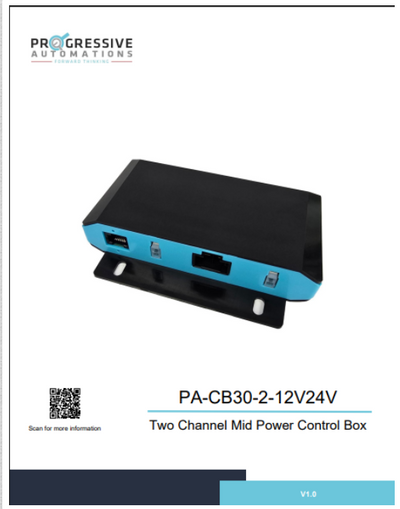
De PA-CB30-besturingskast in combinatie met de RT-41 afstandsbediening voor lineaire actuators biedt tweekanaals uitgangen voor de individuele besturing van twee actuators en de mogelijkheid om tot 4 afstandsbedieningen te koppelen. Met de meegeleverde RF-afstandsbediening hebben gebruikers toegang tot functies zoals Omhoog (kanaal 1), Omlaag (kanaal 1), Omhoog (kanaal 2), Omlaag (kanaal 2), programmeermodi en Stop vanaf een bereik van 60 ft (18,29 m) in de open lucht. De besturingskast heeft een automatische energiebesparingsmodus (4 mA bij 12 VDC) met onmiddellijke activering, selectie van draadloze afstandsbedieningsmodus, modus voor soepele beweging, momentane en niet-momentane bediening en LED-indicator.
Beveiligingsfuncties omvatten bescherming tegen ingangsspanning buiten bereik, overbelasting, kortsluiting en omgekeerde polariteit van de ingangsspanning. Geschikte kabelboomopties met Molex-connectors worden apart verkocht en worden gebruikt om uw lineaire actuator met de PA-CB30-besturingskast te verbinden. Deze besturingskast accepteert een ingang van 10 tot 26 VDC over de voedingsdraden en is per kanaal geschikt voor een uitgangsstroom van 12,5 A bij 12 VDC of 6,25 A bij 24 VDC. Raadpleeg het PA-CB30-datasheet voor informatie over bediening, bekabeling en probleemoplossing.
Belangrijk: Deze besturingskast wordt niet geleverd met een kabelboom. Controleer de vereisten van uw opstelling, want de kabelboom moet mogelijk apart worden aangeschaft.
Aangepaste opties
Op zoek naar een actuator, maar sluiten de specificaties niet precies aan op uw wensen? We hebben een uitgebreide lijst met maatwerkmogelijkheden zodat u precies krijgt wat u nodig heeft voor uw project. Download het datasheet van dit product en ontdek meer over uw aanpassingsopties!
De PA-CB30-besturingskast in combinatie met de RT-41 afstandsbediening voor lineaire actuators biedt tweekanaals uitgangen voor de individuele besturing van twee actuators en de mogelijkheid om tot 4 afstandsbedieningen te koppelen. Met de meegeleverde RF-afstandsbediening hebben gebruikers toegang tot functies zoals Omhoog (kanaal 1), Omlaag (kanaal 1), Omhoog (kanaal 2), Omlaag (kanaal 2), programmeermodi en Stop vanaf een bereik van 60 ft (18,29 m) in de open lucht. De besturingskast heeft een automatische energiebesparingsmodus (4 mA bij 12 VDC) met onmiddellijke activering, selectie van draadloze afstandsbedieningsmodus, modus voor soepele beweging, momentane en niet-momentane bediening en LED-indicator.
Beveiligingsfuncties omvatten bescherming tegen ingangsspanning buiten bereik, overbelasting, kortsluiting en omgekeerde polariteit van de ingangsspanning. Geschikte kabelboomopties met Molex-connectors worden apart verkocht en worden gebruikt om uw lineaire actuator met de PA-CB30-besturingskast te verbinden. Deze besturingskast accepteert een ingang van 10 tot 26 VDC over de voedingsdraden en is per kanaal geschikt voor een uitgangsstroom van 12,5 A bij 12 VDC of 6,25 A bij 24 VDC. Raadpleeg het PA-CB30-datasheet voor informatie over bediening, bekabeling en probleemoplossing.
Belangrijk: Deze besturingskast wordt niet geleverd met een kabelboom. Controleer de vereisten van uw opstelling, want de kabelboom moet mogelijk apart worden aangeschaft.
Aangepaste opties
Op zoek naar een actuator, maar sluiten de specificaties niet precies aan op uw wensen? We hebben een uitgebreide lijst met maatwerkmogelijkheden zodat u precies krijgt wat u nodig heeft voor uw project. Download het datasheet van dit product en ontdek meer over uw aanpassingsopties!
Het volgen van een set normen is cruciaal voor bedrijven om ervoor te zorgen dat hun producten en diensten een kwaliteitsniveau halen dat klanttevredenheid bevordert. Bij Progressive Automations gaan we voor niets minder dan het beste voor onze klanten en streven we naar voortdurende verbeteringen. Daarom zijn we verheugd aan te kondigen dat Progressive Automations nu ISO 9001:2015‑gecertificeerd is!
Kwaliteit waarop u kunt vertrouwen – Meer informatieGegevensbladen
PA-CB30-2-12V24V Datasheet

Hoe u uw valdeurtoepassing automatiseert
Een valdeur is een schuif- of scharnierende deur die gelijk ligt met het oppervlak van een vloer,...

Gids voor voedingen en besturingskasten
Het kiezen van een geschikte voeding en besturingskast voor lineaire actuators is cruciaal om een...

Maak kennis met de PA-CB30 draadloze tweekanaals besturingskast
De voortgang van actuatortechnologie en automatiseringssystemen heeft een groeiende behoefte gecr...

Maak kennis met de PA-CB31 en PA-CB40 actuator-besturingskasten
We zijn verheugd de introductie aan te kondigen van twee nieuwe toevoegingen aan onze groeiende r...

Sponsoring: voortgangsrapport Phantom BBQ van Dr. Decks
Dr. Decks is al lange tijd een van onze meest gewaardeerde klanten en we hebben in het verleden s...
Afhankelijk van uw toepassing zijn er verschillende specificatie-eisen waarmee u rekening moet houden bij het bepalen van de lineaire actuator die u nodig heeft. Deze eisen omvatten kracht, slaglengte, snelheid en montage-afmetingen. Voor gedetailleerde informatie over de actuator kunt u het datasheet of de specificatietabel raadplegen op de productpagina van de geselecteerde actuator. U kunt ook contact met ons opnemen om met een van onze experts te spreken.
Inschakelduur is het deel van de werkperiode waarin een lineaire actuator actief kan blijven. U kunt de inschakelduur van een lineaire actuator berekenen met de volgende vergelijking: Inschakelduur (%) = (Tijd dat de lineaire actuator actief is) / (Tijd voor één werkperiode)
Voorbeeld: Bij een inschakelduur van 25% kan een actuator 5 minuten onafgebroken draaien en moet hij vervolgens 15 minuten rusten voordat hij weer kan functioneren.
Slaglengte is de verplaatsingsafstand van de uitschuivende stang. Om de benodigde slaglengte te bepalen, meet u uw toepassing van de volledig ingetrokken positie tot de volledig uitgeschoven positie. Het verschil is de slaglengte die u nodig heeft.
We raden altijd aan een actuator te kopen met een hogere krachtclassificatie dan uw toepassing vereist. Als u niet zeker bent van de benodigde kracht, kan dit artikel u helpen dit te berekenen: Hoe u de kracht berekent om de juiste lineaire actuator te vinden
Ja, dat is mogelijk. Het hangt echter af van de units die u momenteel gebruikt. Om actuatoren te synchroniseren hebben ze een vorm van terugkoppeling nodig, zoals een potentiometer of hall-effectsensoren. Zie hieronder voor meer informatie in enkele van onze belangrijkste artikelen over het synchroniseren van lineaire actuatoren.
Meerdere lineaire actuatoren tegelijk aansturen
Hoe maakt u gebruik van FLTCON-2 & FLTCON-4 besturingskasten?
De besturingskast die u kiest, moet voldoende spanning en stroom leveren voor uw actuator. Als u niet zeker bent van de specificaties, neem dan contact met ons op.
U kunt ook compatibele besturingskasten vinden op de productpagina van de door u geselecteerde lineaire actuator.
Backdriving treedt op wanneer een actuator onder belasting naar beneden begint te schuiven, hetzij bij overbelasting, hetzij wanneer de actuator is beschadigd. Bekijk de video.
Wat betekenen dynamische en statische belastingswaarden?Dynamische belastingswaarde is het gewicht dat een actuator veilig kan trekken of duwen wanneer hij onder spanning staat. Statische belastingswaarde is het gewicht dat de actuator kan vasthouden of weerstaan zonder backdriving wanneer hij niet onder spanning staat. Stel dat u een actuator op een raam hebt geïnstalleerd en de statische belastingswaarde van de actuator is 100lbs, dan kan er bij harde wind backdriving optreden, wat betekent dat er meer druk op de actuator wordt uitgeoefend, waardoor de 100lbs-belastingswaarde van de actuator wordt overschreden.
Wat is zijdelingse belasting?Zijdelingse belasting is wanneer de actuator krachten ondervindt vanuit het laterale vlak. Actuatoren zijn niet bedoeld om zijdelingse krachten te verwerken; als ze dergelijke krachten ondervinden, zal dit waarschijnlijk de actuator beschadigen of de stang buigen. Het is daarom af te raden om ooit zijdelingse krachten te gebruiken, en zorg er altijd voor dat de actuator volledig in lijn of in sync met uw toepassing staat, zodat hij geen andere belasting opneemt dan de axiale belasting. Bekijk de video.