


Micro vérin linéaire compact compatible PWM
Micro vérin linéaire compact compatible PWM
Modèle: PA-MC2-2-9-N-12VDC
Impossible de charger la disponibilité du retrait
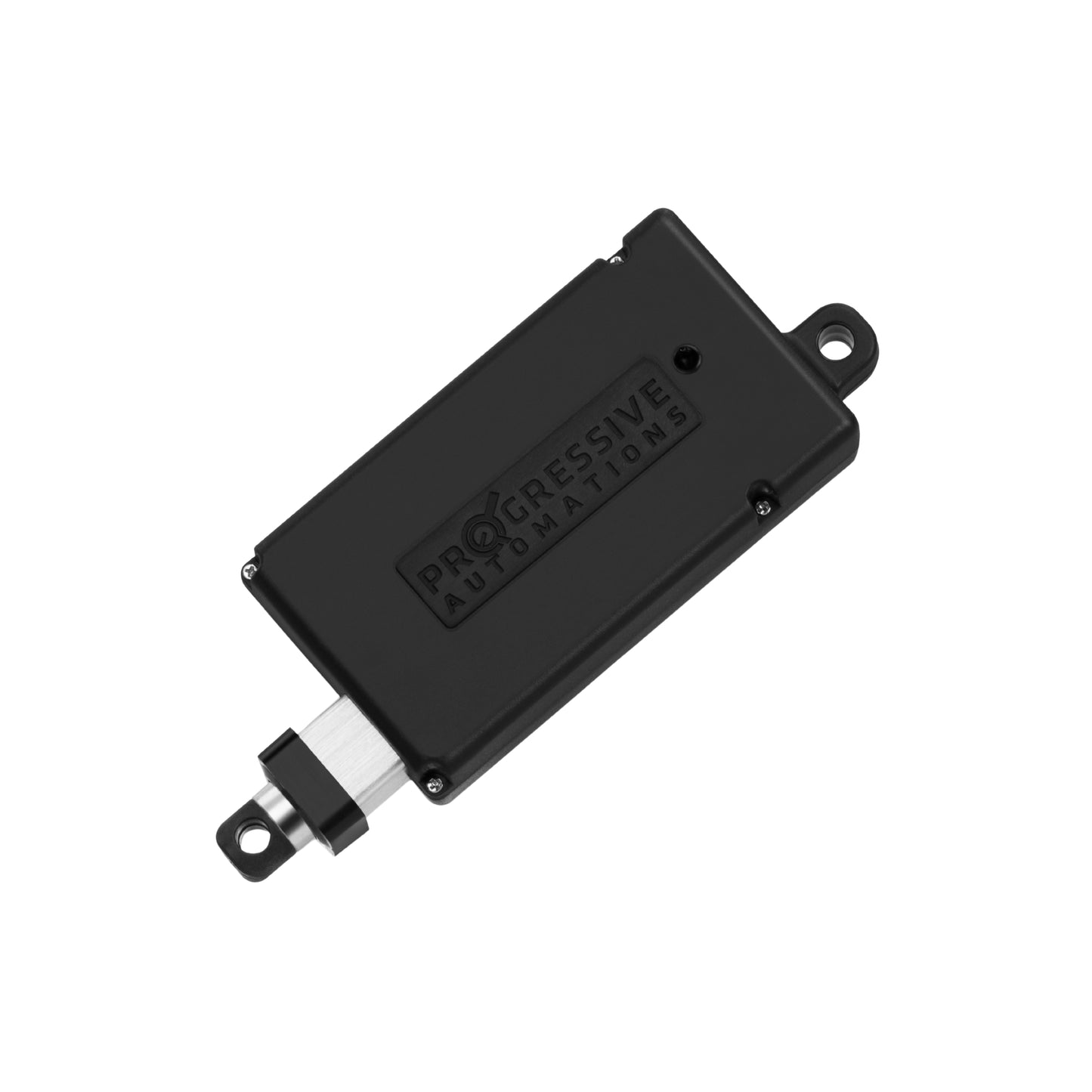
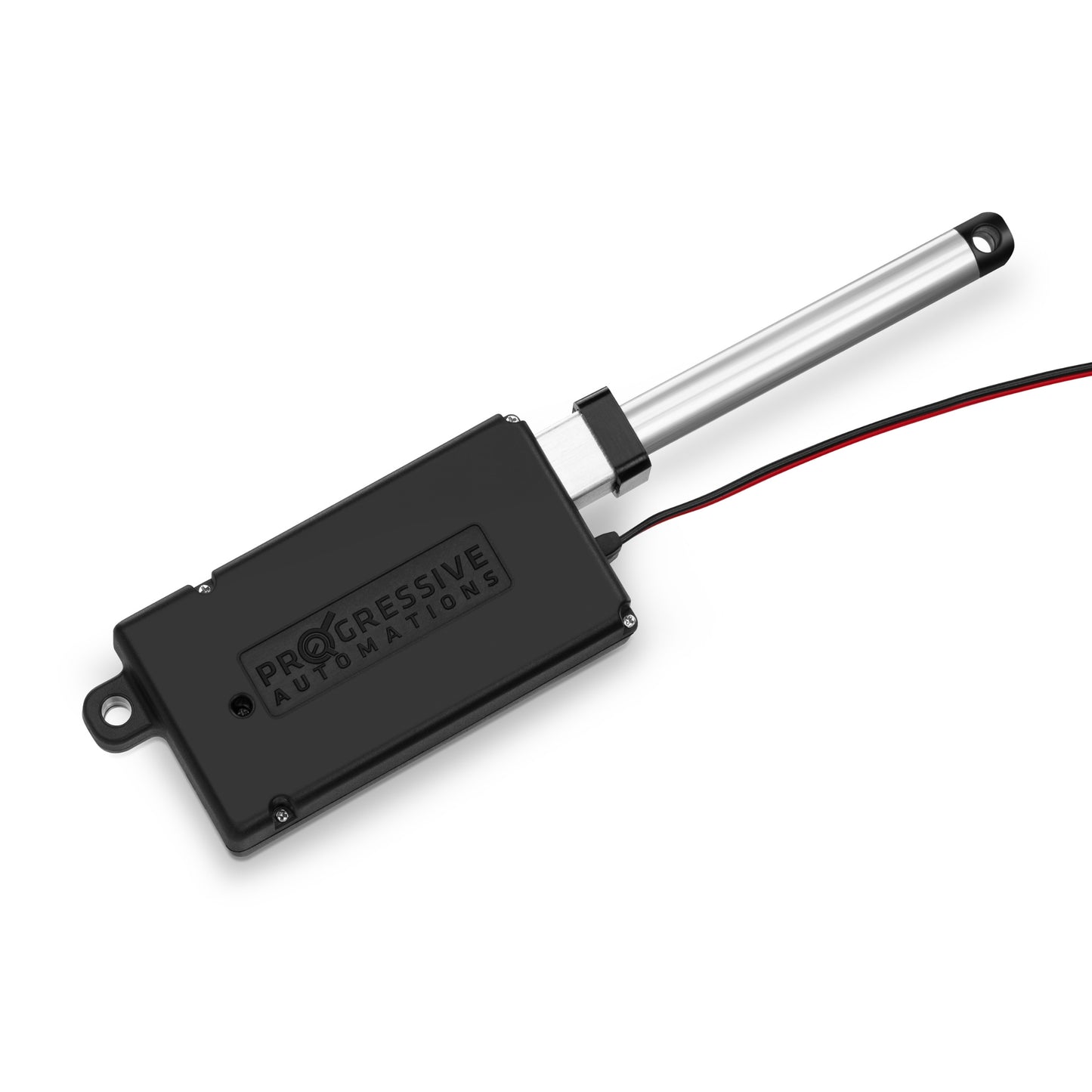
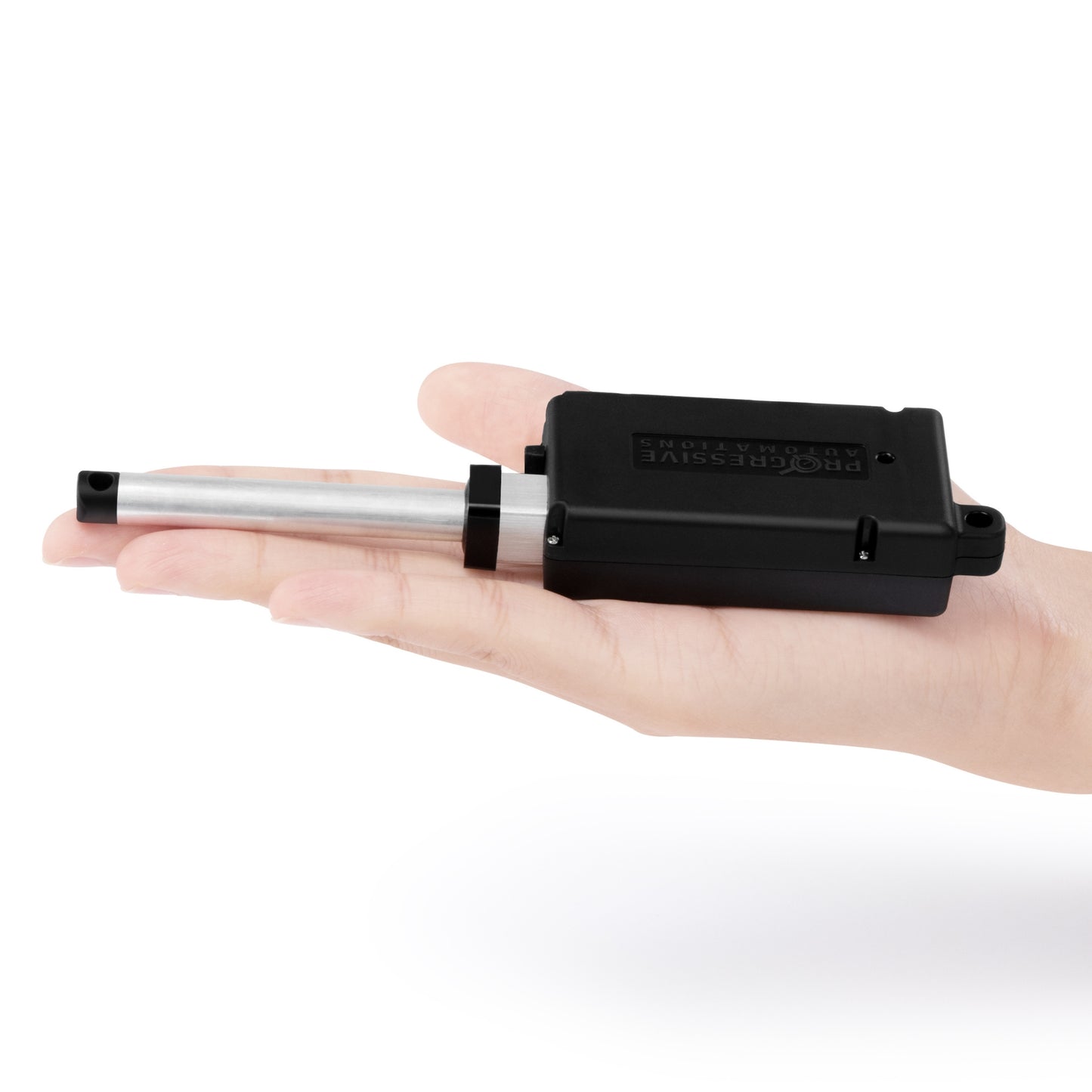
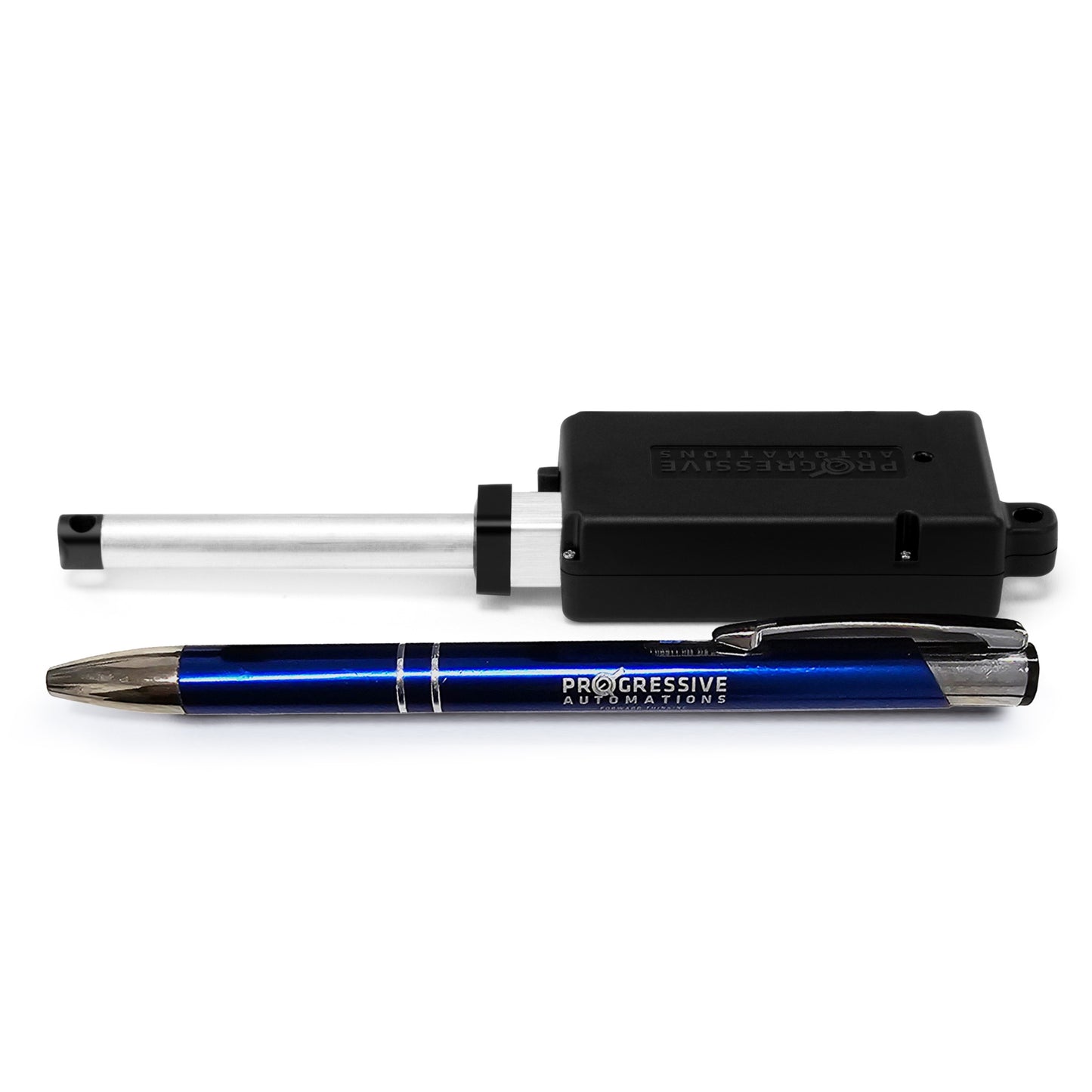
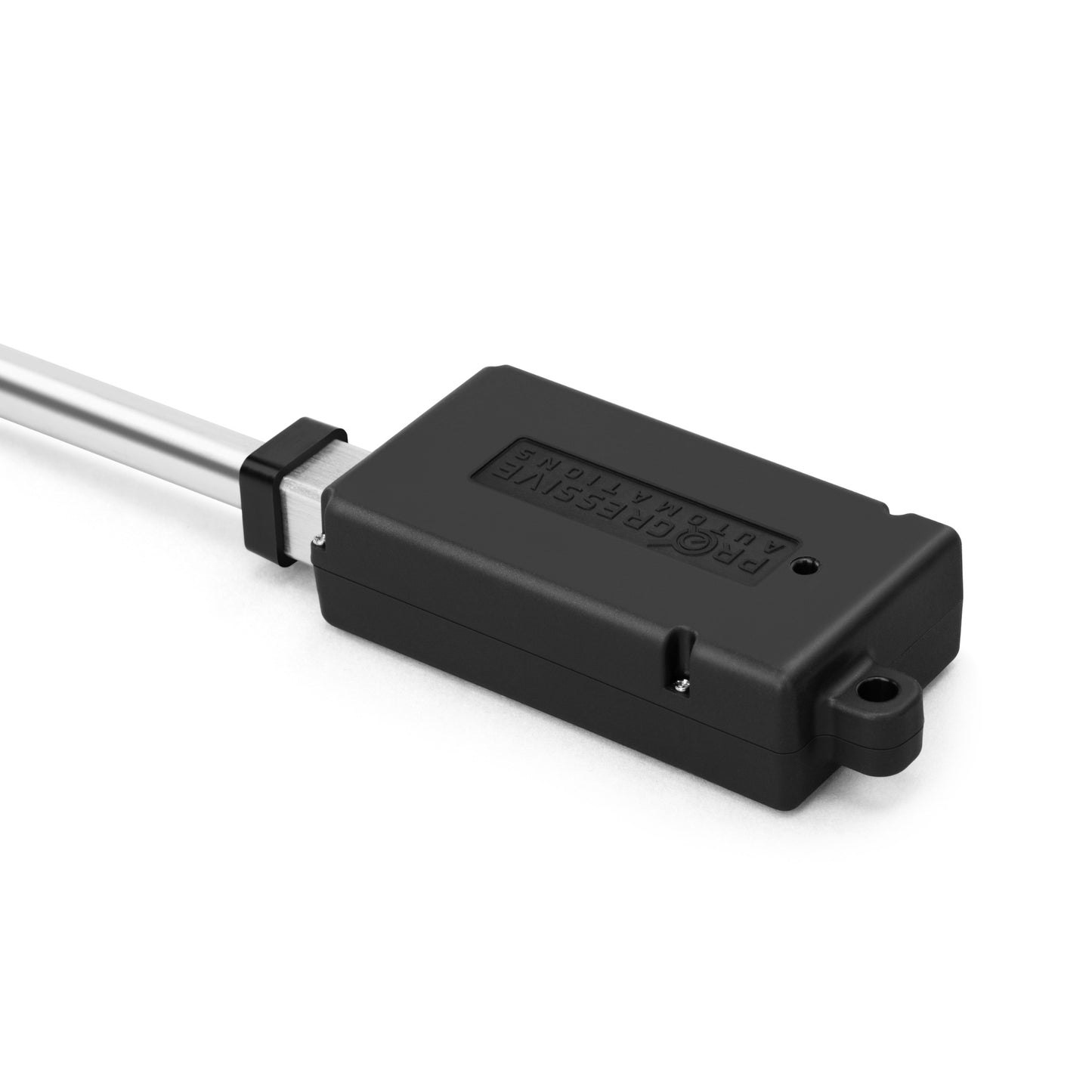
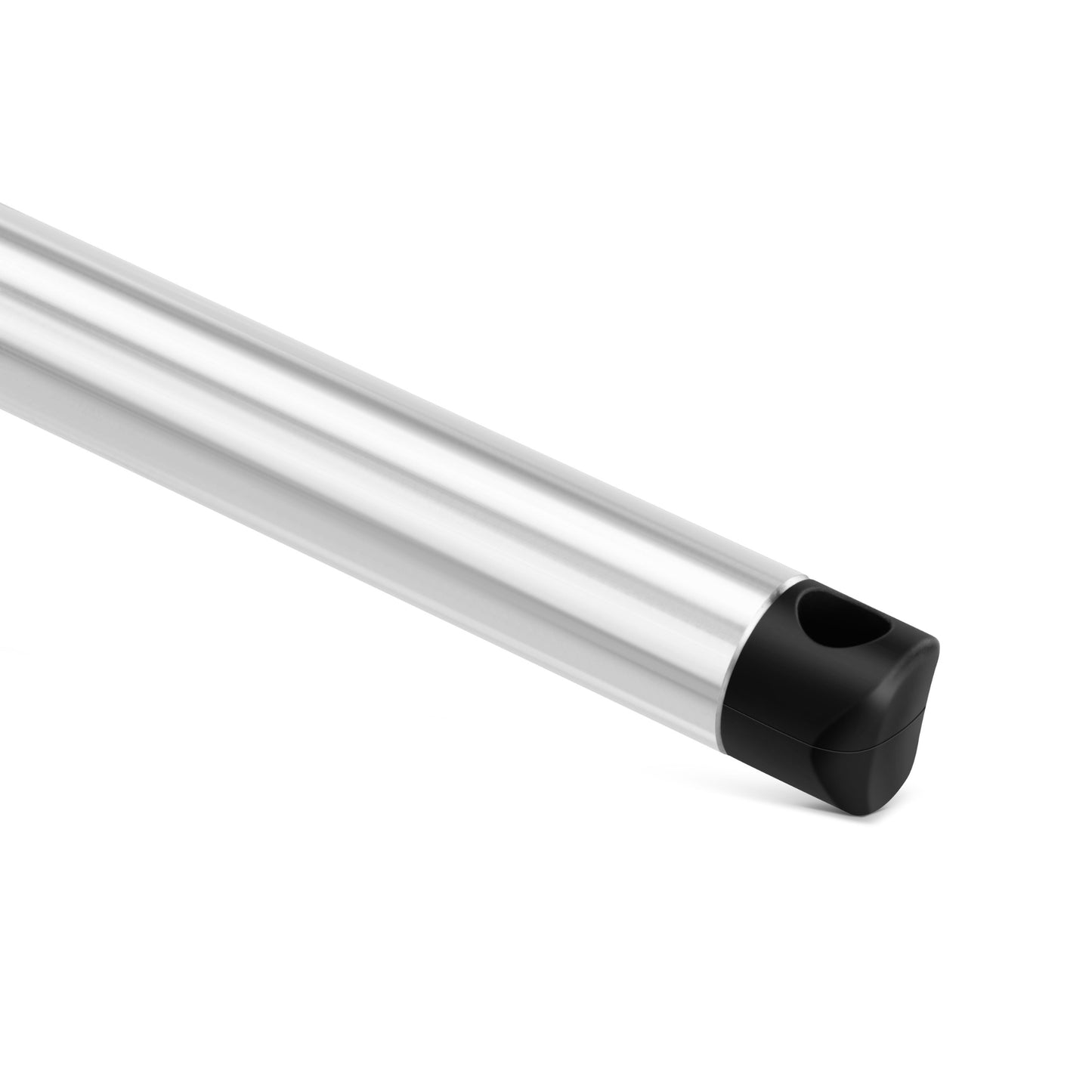
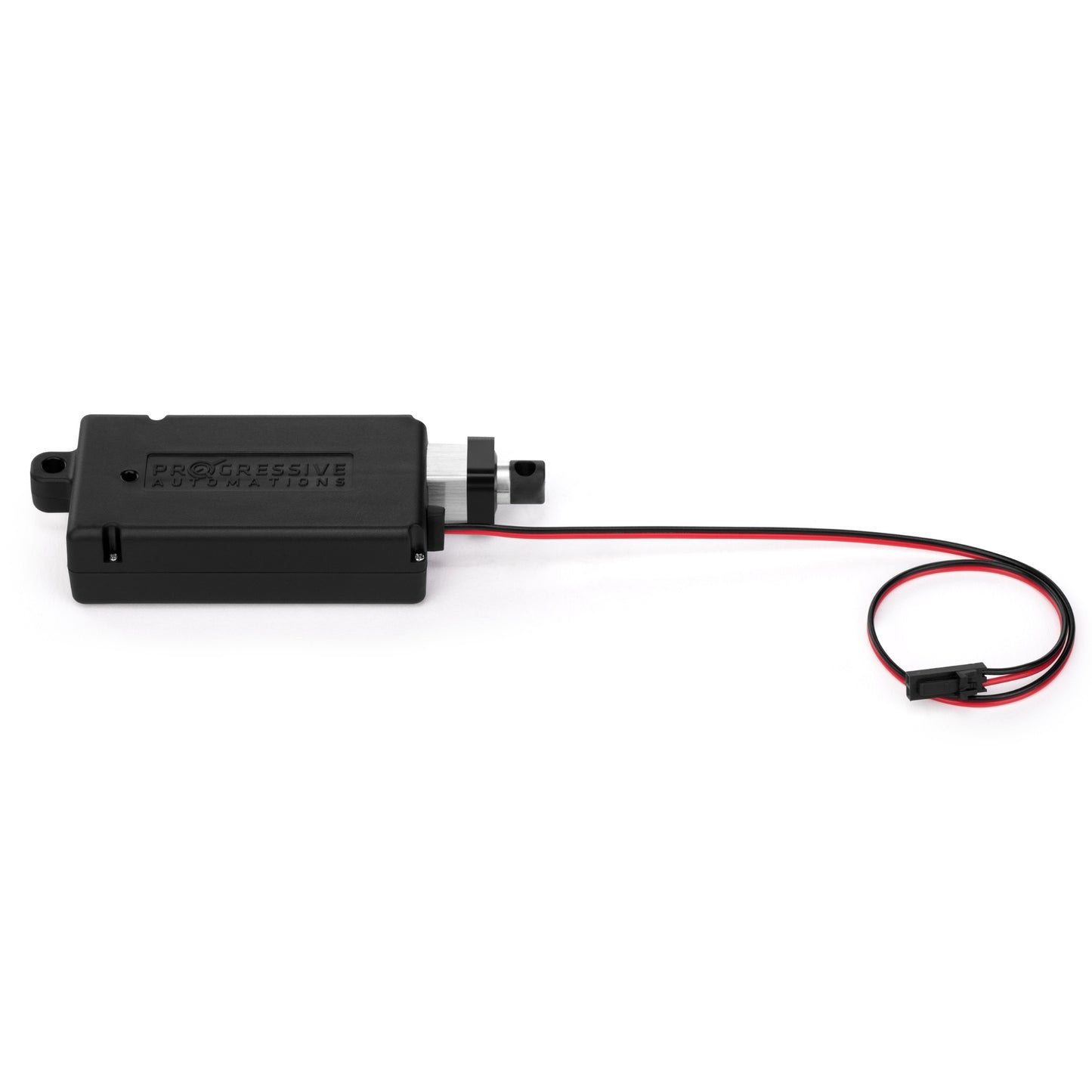
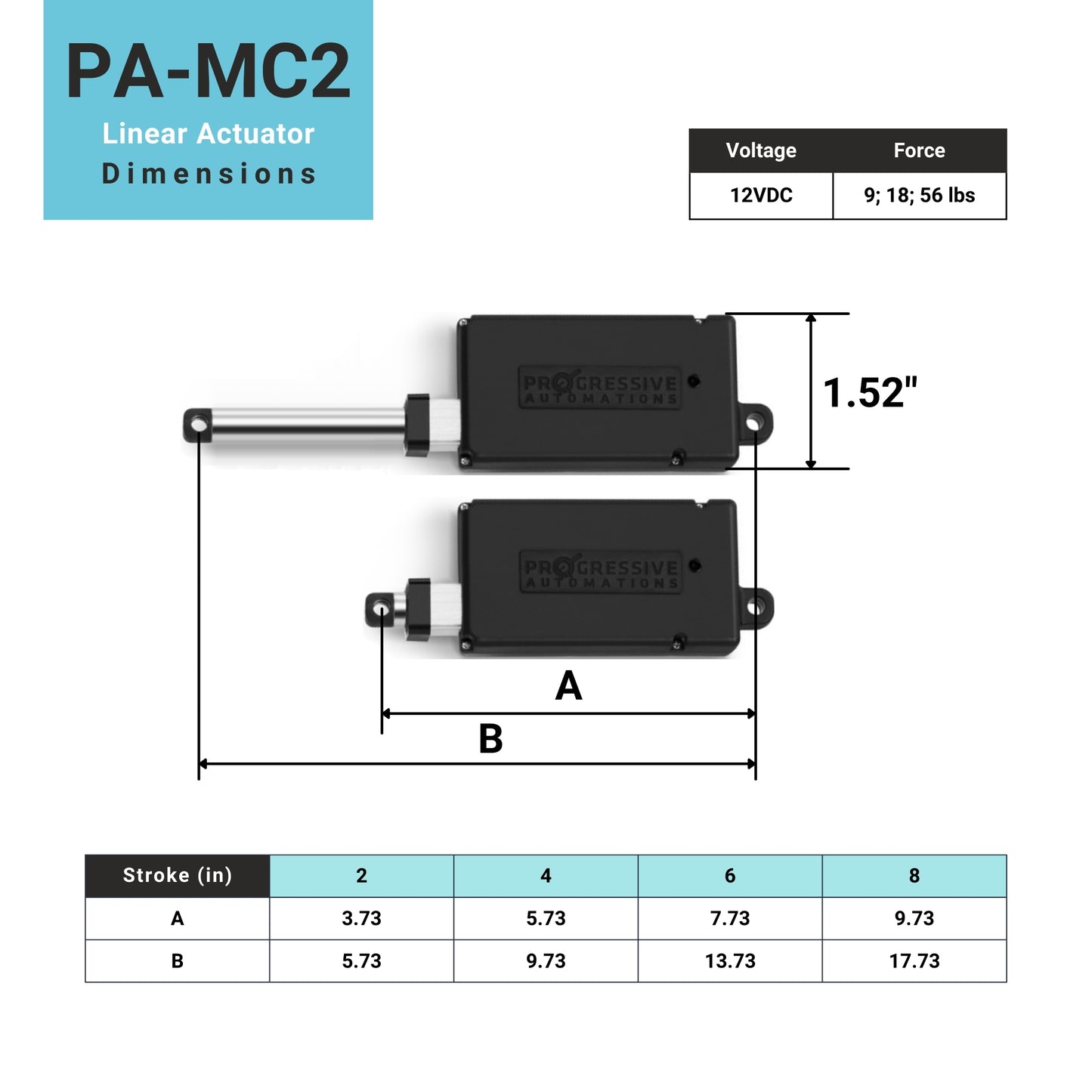
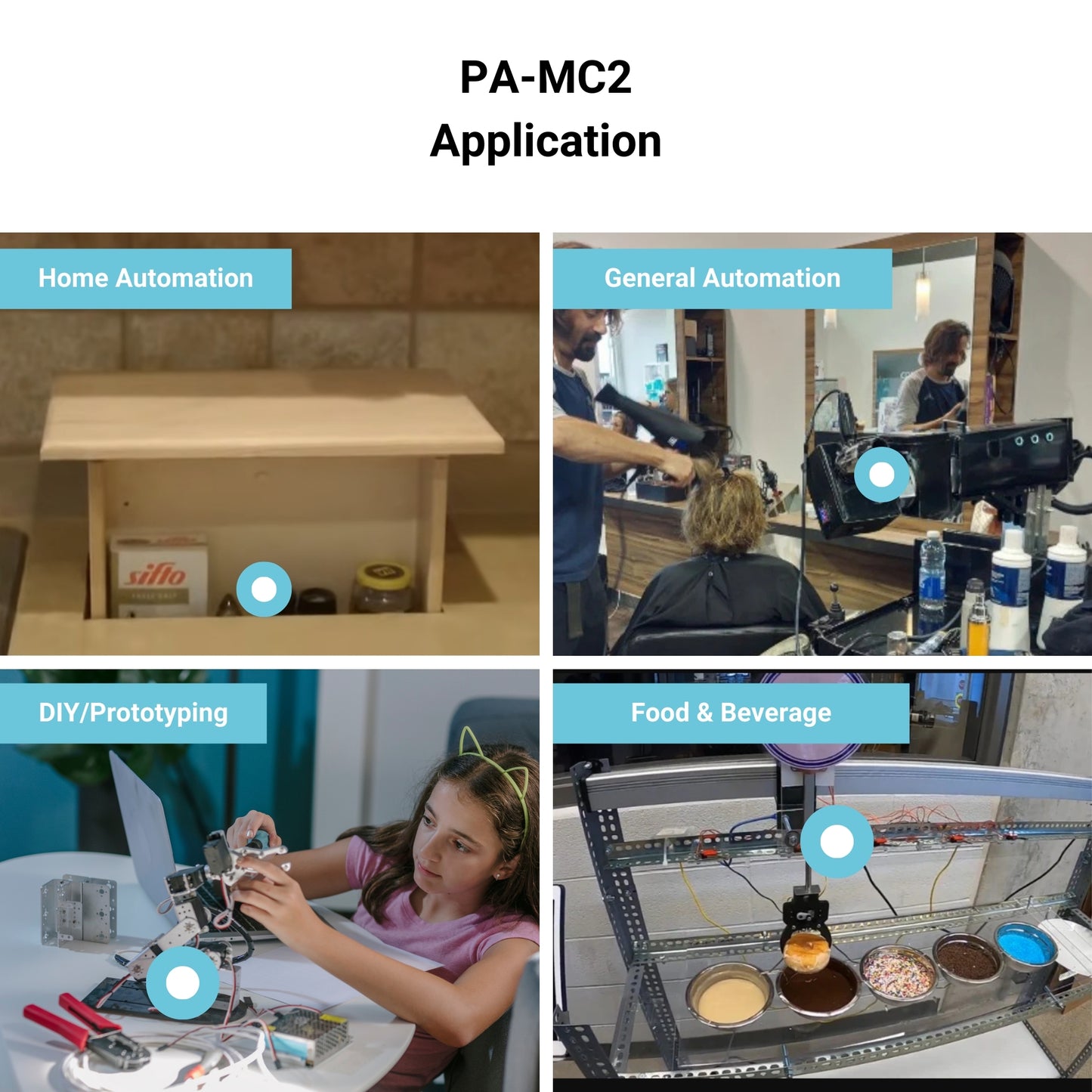
Nos micro actionneurs PA-MC2 présentent un design compact pour les petits espaces et les projets avec de fortes contraintes d’encombrement, tout en offrant des matériaux de construction durables tels qu’une tige en acier inoxydable pour des performances fiables. Compte tenu de leur taille et de leurs capacités en force, nos micro actionneurs PA-MC2 offrent également une vitesse élevée pouvant atteindre 2.09"/sec à vide avec l’option de force 9 lbs. En tant qu’actionneur compatible PWM, le PA-MC2, associé à des boîtiers de commande compatibles PWM, permet des fonctions de démarrage et d’arrêt progressifs.
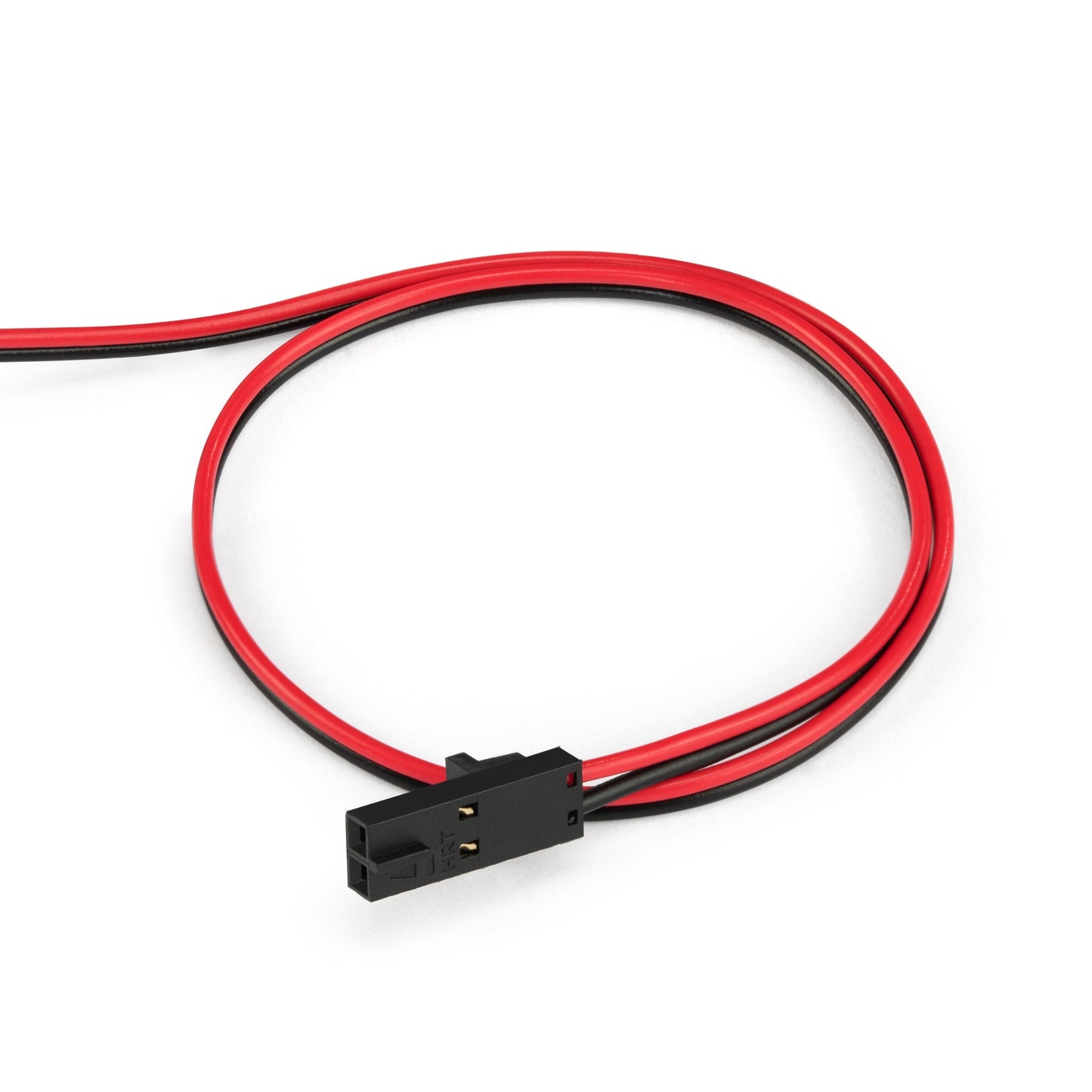
Simple fonctionnement à 2 fils, combiné à une faible consommation de courant, permet une intégration aisée aux systèmes existants dans de nombreuses applications et industries. La large gamme d’options de force disponibles dans un format compact offre la polyvalence nécessaire d’un actionneur pour domotique, agroalimentaire, projets de bricolage, et automatisation générale. Pour la liste complète des spécifications et les dessins cotés, veuillez consulter la fiche technique de notre micro actionneur PA-MC2.
OPTIONS DE MONTAGE :
Le jeu de supports BRK-MC1 (hors support en L), conçu pour notre micro vérin linéaire, permet une installation simple. Pour des informations et spécifications plus détaillées, veuillez consulter notre page produit des supports.
SYSTÈMES DE COMMANDE :
La faible consommation de courant permet une connectivité avec la plupart de nos systèmes de commande. Pour plus d’informations sur nos boîtiers de commande plug-and-play et nos microcontrôleurs de développement, veuillez consulter notre page consacrée aux systèmes de commande.
Custom options
Looking for an actuator but the specifications don't exactly match what you require? We have an extensive list of customization capabilities to ensure you get exactly what you need for your project. Download this product's data sheet and find out more about your customization options!
Nos micro actionneurs PA-MC2 présentent un design compact pour les petits espaces et les projets avec de fortes contraintes d’encombrement, tout en offrant des matériaux de construction durables tels qu’une tige en acier inoxydable pour des performances fiables. Compte tenu de leur taille et de leurs capacités en force, nos micro actionneurs PA-MC2 offrent également une vitesse élevée pouvant atteindre 2.09"/sec à vide avec l’option de force 9 lbs. En tant qu’actionneur compatible PWM, le PA-MC2, associé à des boîtiers de commande compatibles PWM, permet des fonctions de démarrage et d’arrêt progressifs.
Simple fonctionnement à 2 fils, combiné à une faible consommation de courant, permet une intégration aisée aux systèmes existants dans de nombreuses applications et industries. La large gamme d’options de force disponibles dans un format compact offre la polyvalence nécessaire d’un actionneur pour domotique, agroalimentaire, projets de bricolage, et automatisation générale. Pour la liste complète des spécifications et les dessins cotés, veuillez consulter la fiche technique de notre micro actionneur PA-MC2.
OPTIONS DE MONTAGE :
Le jeu de supports BRK-MC1 (hors support en L), conçu pour notre micro vérin linéaire, permet une installation simple. Pour des informations et spécifications plus détaillées, veuillez consulter notre page produit des supports.
SYSTÈMES DE COMMANDE :
La faible consommation de courant permet une connectivité avec la plupart de nos systèmes de commande. Pour plus d’informations sur nos boîtiers de commande plug-and-play et nos microcontrôleurs de développement, veuillez consulter notre page consacrée aux systèmes de commande.
Custom options
Looking for an actuator but the specifications don't exactly match what you require? We have an extensive list of customization capabilities to ensure you get exactly what you need for your project. Download this product's data sheet and find out more about your customization options!
Following a set of standards is crucial for businesses to ensure their products and services can meet a level of quality that promotes customer satisfaction. At Progressive Automations, we aim for nothing but the best for our customers and strive toward continual improvements. Because of this, we are excited to announce that Progressive Automations is now ISO 9001:2015 certified!
Quality You Can Trust – Learn MoreFiches techniques

PA-MC2 Data Sheet
Modèles 2D/3D

PA-MC2 Data Sheet
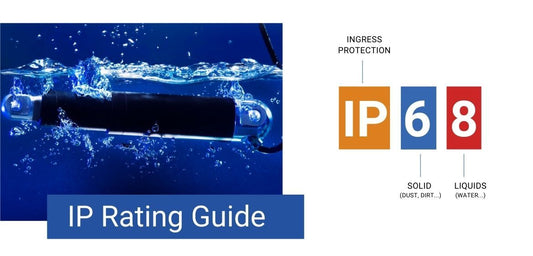
Guide complet des indices de protection (IP)
Parmi les questions qui nous sont le plus souvent posées, beaucoup concernent la protection et le...
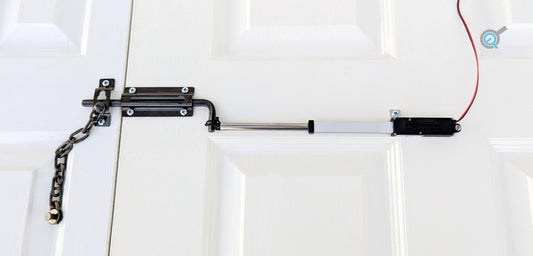
Verrou à pêne coulissant avec micro vérins linéaires PA-MC1
Les verrous à pêne coulissant se trouvent presque partout comme moyen de verrouiller et sécuriser...

Top 5 des idées de décorations et d’animatroniques d’Halloween à faire soi‑même
Les projets d’Halloween sont un excellent moyen de favoriser le plaisir et la créativité pour se ...
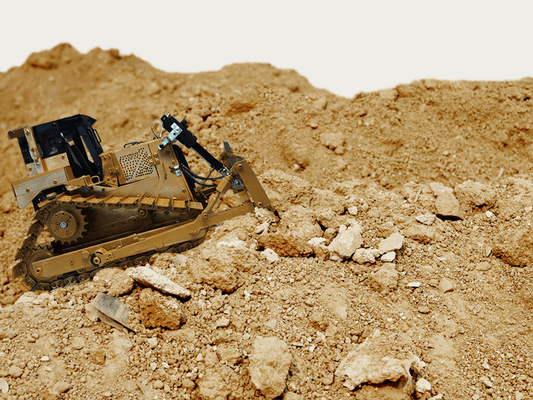
Tracteur Caterpillar à l’échelle 12:1 utilisant des micro-vérins linéaires
Les vérins linéaires sont de plus en plus utilisés dans différents secteurs et pour diverses appl...
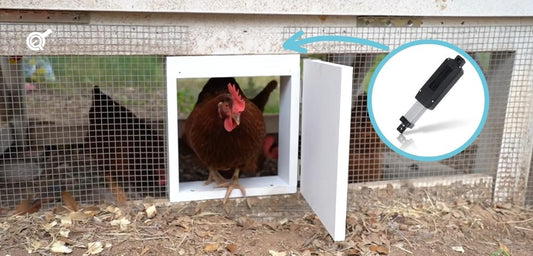
Porte de poulailler automatique DIY par April Wilkerson
Élever des poules et avoir des œufs frais tous les jours est vraiment gratifiant ; cependant, que...
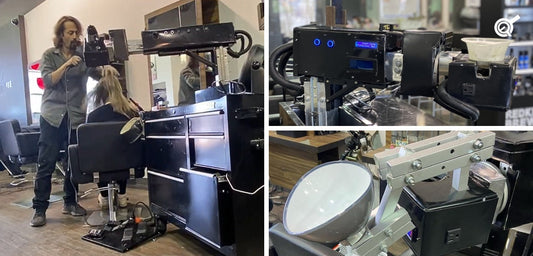
Assistant bras robotisé pour coiffeur par Joseph Dukes
L’innovation est un aspect crucial pour stimuler la croissance de toute entreprise et offrir une ...

Parrainage du Donut Bot par l’Université de Waterloo
Plusieurs raisons peuvent amener à juger certains donuts de qualité médiocre ou peu satisfaisants...
Depending on your application, there are different specification requirements you should consider when determining the linear actuator you need. These requirements include force, stroke, speed and mounting dimensions. For detailed actuator information, you can refer to either the datasheet or the specification table located on the selected actuator's product page. You can also contact us to speak with one of our expert engineers.
Duty cycle is the fraction of the working period in which a linear actuator can remain active. You can calculate the duty cycle of a linear actuator by using the following equation: Duty cycle (%) = (Time the linear actuator is active) / (Time for one working period)
For example: With a 25% duty cycle, an actuator can run for 5 minutes continuously before needing to rest for 15 minutes before operating.
Stroke is the travel distance of the extending rod. To find the stroke length you require, measure your application from the fully retracted position to the fully extended position. The difference will equal the stroke length you require.
We always recommend purchasing an actuator with a higher force rating than what the application requires. If unsure of your force requirements, this article may help you calculate this: How to Calculate Force to Find the Right Linear Actuator
Yes, this is possible. However, it does depend on the units you are currently using. To synchronize actuators, they require a form of feedback such as a potentiometer or hall effect sensors. For more information, see below some of our key content regarding linear actuator synchronization.
The control box you choose should be able to provide sufficient voltage and current rating to your actuator. If you are unsure of the specifications, please contact us.
Alternatively, you can also find compatible control boxes on your selected linear actuator's product page.
Backdriving is when an actuator starts sliding down under load, when it is either overloaded or when the actuator has been damaged. Watch the video.
What Does Dynamic and Static Load Ratings Mean?Dynamic load rating is the amount of weight an actuator can pull or push safely when being powered. Static load rating is the amount of weight the actuator can hold or withstand without back driving when it is not being powered. For example, let's just say you have an actuator installed on a window and the static load rating of the actuator is 100lbs, it could experience backdriving when there is a high wind event, which means there will be more pressure exerted on the actuator which would exceed the 100lbs load rating of the actuator.
What Is Lateral Loading?Lateral loading is when the actuator experiences forces from the lateral plane. Actuators are not meant to handle lateral forces at all so if it experiences any lateral forces, it will likely damage the actuator or bend the rod. So it's advised never to use lateral forces and always make sure the actuator is fully in line or in sync with your application, so it does not take any load other than the axial load. Watch the video.